
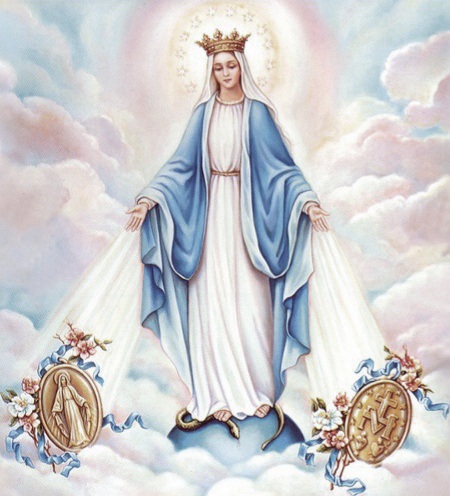
In a striking defense of traditional Mariology, the International Marian Association’s Theological Commission (IMA) has issued a rigorous rebuttal to the recent document Mater Populi Fidelis (MPF), released by the modern Vatican’s Dicastery for the Doctrine of the Faith (DDF). The Commission’s response exposes deep theological ruptures between the new document and the consistent teaching of the Roman Pontiffs prior to the Second Vatican Council, but fails to acknowledge the source of the attacks on Marian titles. Nevertheless, its shortcomings will be told here.
The controversy centers on the DDF’s November 4, 2025, doctrinal note, which attempted to suppress the glorious titles of Our Lady, specifically Co-redemptrix and Mediatrix of All Graces. The DDF, led by Cardinal Fernández, went so far as to label the title Co-redemptrix as “always inappropriate”.
A Direct Affront to the Magisterium of the Popes
The IMA response frankly asserts that labeling the title Co-redemptrix as “always inappropriate” essentially accuses the great Popes of the last century of imprudence and error. As the theologians noted, if the title is inappropriate now, then “the saints and mystics who used this title were irresponsible” and the Popes who approved it acted inappropriately.
The Commission provided an undeniable litany of pre-conciliar Papal support for these doctrines, which the new document largely ignored:
- St. Pius X (1904): In Ad diem illum, the saintly Pontiff taught that Mary “merits for us de congruo… what Jesus Christ merits for us de condigno” and called her the “Reparatrix of the lost world”.
- Benedict XV (1921): Explicitly granted the Mass and Office of “Mary, Mediatrix of All Graces”.
- Pius XI (1933): In a public address, plainly stated: “By necessity, the Redeemer could not but associate His Mother with His work, and for this reason, we invoke her under the title of Co-redemptrix”.
- Pius XII (1943 & 1954): In Mystici Corporis and Ad caeli Reginam, taught that Mary offered Him on Golgotha “together with the sacrifice of her maternal rights” and that she was “associated with Jesus Christ… in a manner comparable to that in which Eve was associated with Adam”.
Although we are in agreement with the previous popes in regards to the Marian titles, which were correctly cited by the Commission, then Commission misses the point by not rejecting the errors of Vatican II which are at the root of Mater Populi Fidelis inception. A document which should have never existed in the first place. This distinction will be further illustrated below.
The Denial of Instrumental Causality
Perhaps most alarming to traditional theologians is the DDF’s refusal to acknowledge Mary as an “instrument” or “secondary cause” of grace. The modern document claims this would make Mary “parallel” to Christ.
The IMA refutes this by citing the Angelic Doctor and traditional sacramental theology. They argue that just as the Sacraments are instrumental causes of grace used by God, so too is the Blessed Virgin an instrument in the hands of the Almighty. They quoted St. Pius X, who famously described Mary as the “neck” connecting the Head (Christ) to the Body (the Faithful), through which all life and grace flows.
The response highlights that to deny Mary’s mediation is to dismantle the logic of the Incarnation itself, wherein God chooses to use human instruments to effect salvation.
Ecumenical Compromise over Dogmatic Truth
The IMA also exposed the ecumenical motivations behind the suppression of these titles. They revealed that the title Co-redemptrix was removed from the Second Vatican Council’s schema not because it was false, but because it was deemed “difficult for the separated brethren (such as the Protestants) to understand”.
The Commission noted that the modern DDF’s position seems to align more with a “Protestant theology of Redemption” based on “Jesus alone” rather than the authentic Catholic conception which has always recognized the “human redemptive value on the part of Mary”.
Pastoral Devastation
The report warns of the disastrous effects this new modernist stance will have on the piety of the faithful. It casts a shadow of doubt over the Legion of Mary, whose handbook refers to Mary as Mediatrix of All Graces ten times, and threatens the identity of religious orders bearing the title Co-redemptrix.
The Theological Commission concluded by calling for a “re-evaluation” of the DDF document, praying for a return to doctrine that is in “harmony with the doctrinal teachings of previous popes”.
A Missed Opportunity to Expose the Root Cause
While the International Marian Association’s theological defense of Our Lady’s prerogatives is robust, a critical reading reveals a significant blind spot in their conclusion. The theologians rightly identify that the Vatican’s current direction resembles “more a Protestant theology of Redemption than that of the Catholic Church”. However, they fail to explicitly connect this “Protestantization” to its twin brother: false ecumenism and synodality.
Appealing to the Disease as the Cure
Instead of identifying “synodality” as the very mechanism used to dilute Catholic truth to accommodate non-Catholics, the IMA attempts to appeal to it. In their conclusion, they express hope that their response will contribute to a re-evaluation “in a spirit of true synodal dialogue”.
For the traditional Catholic, this is a fatal strategic error. It was precisely the “ecumenical reasons”, the fear of offending “separated brethren”, that caused the title Co-redemptrix to be stripped from the schema of the Second Vatican Council in 1962. The IMA admits this historical fact, yet they fail to see that the current “synodal” push is simply the maturation of that same erroneous spirit.
Synodality is the Reduction of Mary
The document fails to acknowledge that the “synodal church” seeks to flatten the hierarchy and merge with Protestant sects. Since Protestantism rejects the unique mediation of the Blessed Virgin, a “synodal” church must necessarily strip Her of Her titles to achieve unity. The DDF’s refusal to call Mary a “secondary cause” or “instrument” of grace is the direct result of placing ecumenical consensus above Dogmatic Truth.
By asking for a “synodal dialogue” to save Marian doctrine, the Commission is ironically appealing to the very process designed to dismantle it. One cannot use the tools of the revolution to restore the Queen. While their defense of the doctrine is sound, their failure to condemn the cause, the ecumenical and synodal crisis itself or Vatican II, leaves the door open for further erosion of the Faith.
Leave a Reply
You must be logged in to post a comment.